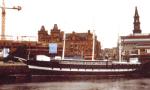
A landmark on Clyde Street in Glasgow for many years, the clipper Carrick is now rotting at the Scottish Maritime Museum in Irvine on the Firth of Clyde. Gordon Neish looks at the vessel’s past – and asks if she has a future. It is almost unbelievable that a clipper five years the senior of Cutty Sark is being allowed to rot on a slipway in Scotland, but that is the current fate of the City of Adelaide, also known as Carrick.
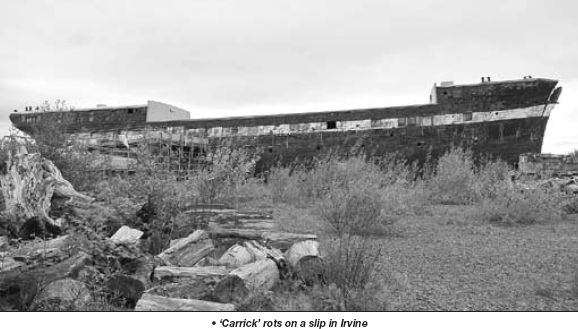
The City of Adelaide was built by William Pile, Hay and Company of Sunderland in 1864 of composite construction, with timber
planking on a wrought iron frame. From 1864 to 1886, the vessel ran a fast liner service between London, Plymouth and Adelaide, making approximately one round the world voyage every year. Purpose built to serve the passenger trade, City of Adelaide played an important role in the development of the colony of South Australia for nearly a quarter of a century.
She carried all classes of passengers - and her first class cabins were considered to be among the finest of the sailing ship era.
Her glory days came to a sudden end, however. In 1887 the vessel was sold to a Dover merchant to carry coals from the Tyne to the Thames. The following year she was sold to a Belfast timber merchant and, until 1893, worked in the North Atlantic bulk timber trade bringing wood into Glasgow, Belfast and Dublin.
In 1893, whilst in Bowling on the Clyde, she was acquired by the Corporation of the City of Southampton, demasted and converted to a hospital isolation ship. Large windows were cut into the ’tween deck to bring light into the ward. This ended her sailing days.
She was purchased by the Admiralty in 1923. As there was already an HMS Adelaide she was named HMS Carrick after refit in Irvine and towed to Greenock to be used as a Royal Navy Reserve drill ship.
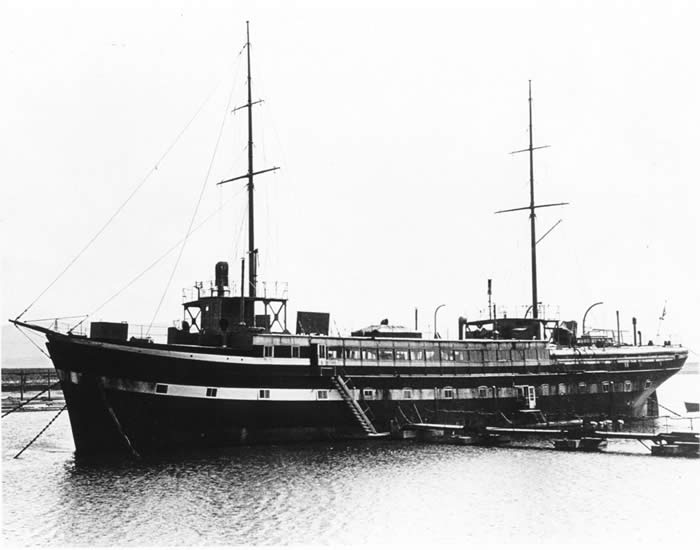 HMS
Carrick at Greenock
|
In 1956 she was presented to the Royal Navy Volunteer Reserve (RNVR) Club of Scotland and moved up the Clyde to Glasgow city centre, where she was tethered off Clyde Street, now named, simply, Carrick. Here she became a local landmark, her decks and internal floors polished to their once-high standard. People once again aspired to board the vessel.
I will confess to being one of many skint-kneed weans told by the uniformed commissionaire to “beat it” after attempting to steal a
peek at her plush interior. By the mid-1980s the RNVR realised that it could not afford to maintain its floating clubrooms. Members sought ways to secure her future and decided to give up ownership. Various bodies were approached, including the newly-established Scottish Maritime Museum.
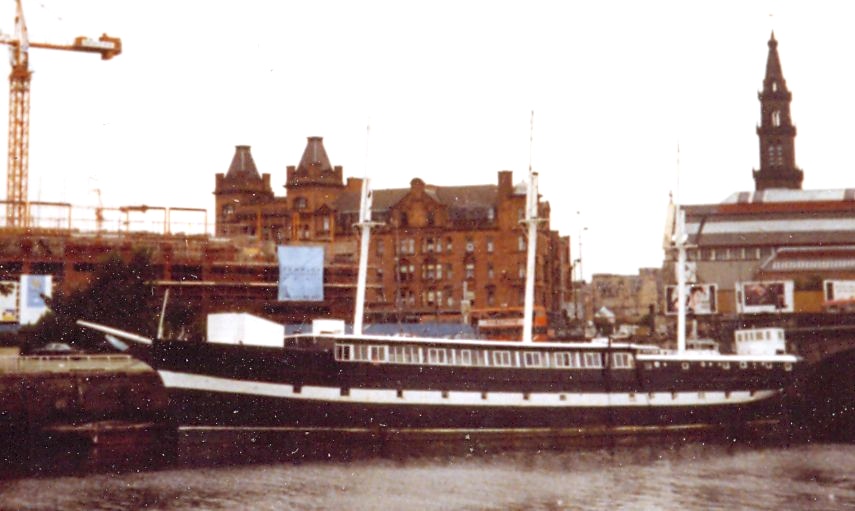 The
"Carrick",
old clipper, at the Broomielaw on River Clyde
in the city centre of Glasgow
|
In 1990 the club gave the vessel to the Clyde Ship Trust, who moved her to Prince’s Dock where, a year later, she sank at her moorings. In 1992, with the encouragement of Historic Scotland and Strathclyde Regional Council, the ship was raised by the Scottish Maritime Museum and towed to Irvine. She was placed on the same slipway as her conversion to HMS Carrick 69 years earlier.
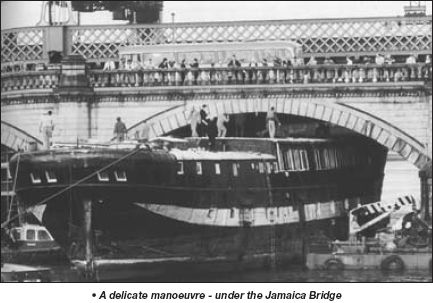
For political reasons restoration funding did not materialise and, in May 2000 the trustees of the Scottish Maritime Museum applied to North Ayshire Council for consent to demolish the ‘listed building’ City of Adelaide. After over 100 letters of objection the council refused permission to demolish, leaving the museum with a headache as slipway rental continued to accrue.
In 2003 a businessman donated funds to keep the structure watertight while the feasibility of restoring the vessel as a tourist adventure sailing ship was explored. The study concluded that the cost to comply with maritime passenger safety regulations
would make restoration more expensive than building a replica. The businessman withdrew his interest, leaving the museum with its original predicament. It again applied to the council to demolish the structure.
Despite over 130 letters of objection the council this time agreed to deconstruction subject to conditions but, after the disastrous fire on the Cutty Sark, the only other clipper of the period in the UK, the 2007 meeting to discuss City of Adelaide’s fate never took place. The matter was referred to the Scottish government, which in March this year announced that it is giving thought to four proposals for the vessel’s future. She will either: Be removed to Sunderland to be restored; be removed to Adelaide,
Australia to be restored; be moved elsewhere in Scotland; or be deconstructed.
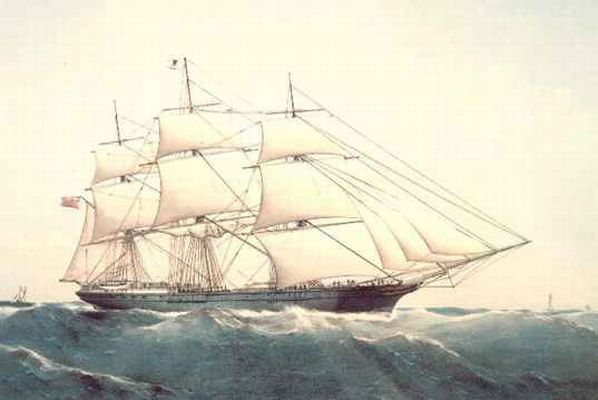
A historical view of The City of Adelaide / HMS Carrick |
The skint-kneed wean, now a little older but not much wiser,would still like to steal a peek at the interior of the Carrick – and hopes one day to be able to do so. However, given the lack of emphasis on maritime heritage outside the south east of England - where Cutty Sark is a hugely popular attraction - he is not holding his breath.
GORDON NEISH, DUNOON OBSERVER & ARGYLLSHIRE STANDARD, FRIDAY 7 MAY 2010
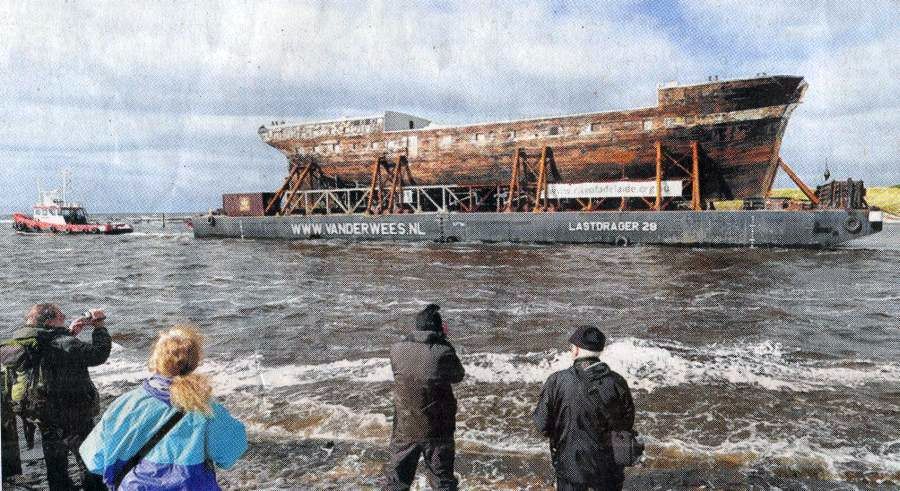
Carrick on barge headed for London |
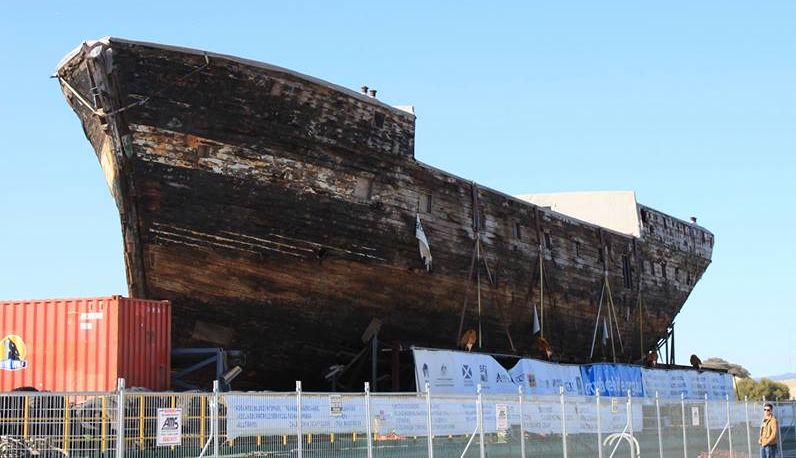
Carrick in Adelaide, Australia |
Southern Highlands :: Central Highlands :: NW Highlands :: Eastern Highlands